

Legends & History: The Cheltenham Gold Cup, A Century of the Sport’s Greatest Race
 |
|


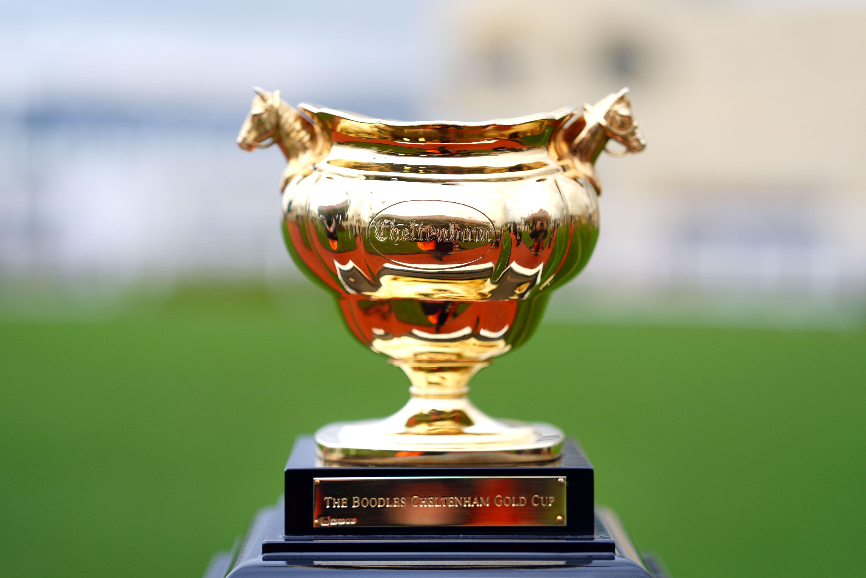
The Cheltenham Gold Cup was first run in its modern form in 1924. One hundred and two years later, Gaelic Warrior stretched away up the Cheltenham hill and crossed the winning post eight lengths clear of Jango Baie to claim the 2026 edition. Between those two events lie the most complete record of equine excellence in jump racing history, a race whose roll of honour reads as the definitive document of National Hunt greatness.
Origins
The Gold Cup was introduced to Cheltenham’s programme as the meeting’s championship race for staying chasers, a test of which horse, at any age, was the best over three miles and more. The early editions produced modest fields and few names that resonate today, but by the 1930s the race had established itself as the season’s most coveted prize. Golden Miller won it five consecutive times between 1932 and 1936, a record that has never been beaten.
The Modern Benchmark: Arkle 1964 – 1966
The race’s modern era begins, for most students of jump racing history, with Arkle’s three consecutive victories between 1964 and 1966. Trained by Tom Dreaper and ridden by Pat Taaffe, Arkle won those three Gold Cups by margins of 5, 20 and 30 lengths respectively, the escalation reflecting the complete absence of any horse capable of giving him a race. Between 1964 and his career-ending injury in December 1966, Arkle’s dominance was so total that the race attracted minimal fields; there was simply no point in running against him at level weights.
His Timeform rating of 212, the highest ever awarded to a steeplechaser, is the benchmark against which every Gold Cup winner since has been assessed.
The People’s Champions: Desert Orchid and the Fan Era
The 1980s and 1990s saw the Gold Cup become a race of genuine drama and public engagement. Desert Orchid, a grey front-runner of exceptional courage and charisma, won the 1989 Gold Cup in conditions everyone, including his trainer David Elsworth, considered unsuitable for him: heavy ground, left-handed, uphill. His victory from Yahoo, in ground that had turned the race into a slog, is one of the most watched finishes in the race’s history. It was not his best performance; it was his most extraordinary.
The grey received more public affection than any horse since Red Rum. His name still appears in polls of the most popular racehorses in British history, decades after his retirement.
Best Mate: The Modern Triple
Between 2002 and 2004, Best Mate (Henrietta Knight/Jim Culloty) won three consecutive Gold Cups, the first horse since Arkle to achieve the feat. The racing world debated obsessively whether Best Mate was approaching Arkle’s level; the consensus, then and now, is that he was not, but that the comparison itself testified to his exceptional quality. His three Gold Cups were won against competitive fields, without the walkover dominance that characterised Arkle’s renewals.
Best Mate’s death on the racecourse at Exeter in November 2005, during ordinary flat race conditions, produced an outpouring of public grief unusual in a sport that has always faced the reality of equine mortality.
The Nicholls-Henderson-Mullins Era
From 2007, Paul Nicholls’ Kauto Star dominated the race. The French-bred chaser won the Gold Cup in 2007 and 2009 and became the first horse in history to regain the title after losing it. His rivalry with stablemate Denman, and the spectacle of the two best horses in Britain being trained in the same yard, defined an era. Kauto Star also won five King George VI Chases, a record that stands. His standing ovation at Kempton Park after that fifth King George is one of the sport’s most moving moments.
Nicky Henderson’s contribution to the Gold Cup includes Bobs Worth in 2013, one of the more surprising winners in recent memory, and, in 2026, Jango Baie’s close second to Gaelic Warrior, suggesting the Seven Barrows yard has a credible Gold Cup horse for next season.
Willie Mullins dominates the modern roll of honour. His five victories, Al Boum Photo (2019, 2020), Galopin des Champs (2023, 2024) and Gaelic Warrior (2026), represent an Irish stranglehold on the race that began with the broader pattern of Irish trainer dominance at Cheltenham established from the 2000s onwards.
2026: Gaelic Warrior’s Place in History
Gaelic Warrior’s 2026 victory was awarded a Timeform rating of 174, placing him between Al Boum Photo (171) and Galopin des Champs (181) among Mullins’ Gold Cup winners. The winning time (6m 39.02s, 10.98 seconds faster than expected) confirmed a high-quality performance on a drying surface. Jockey Paul Townend claimed a record fifth Gold Cup victory, the most of any jockey in the race’s history.
Gaelic Warrior is only eight years old. His next chapter, whether a Gold Cup defence, a retirement, or a different direction, is unwritten. The Gold Cup itself continues into its second century with its reputation as the defining test of National Hunt excellence completely intact.


