

Cheltenham’s Trials Day Surface, What the January Ground Tells March
 |
|


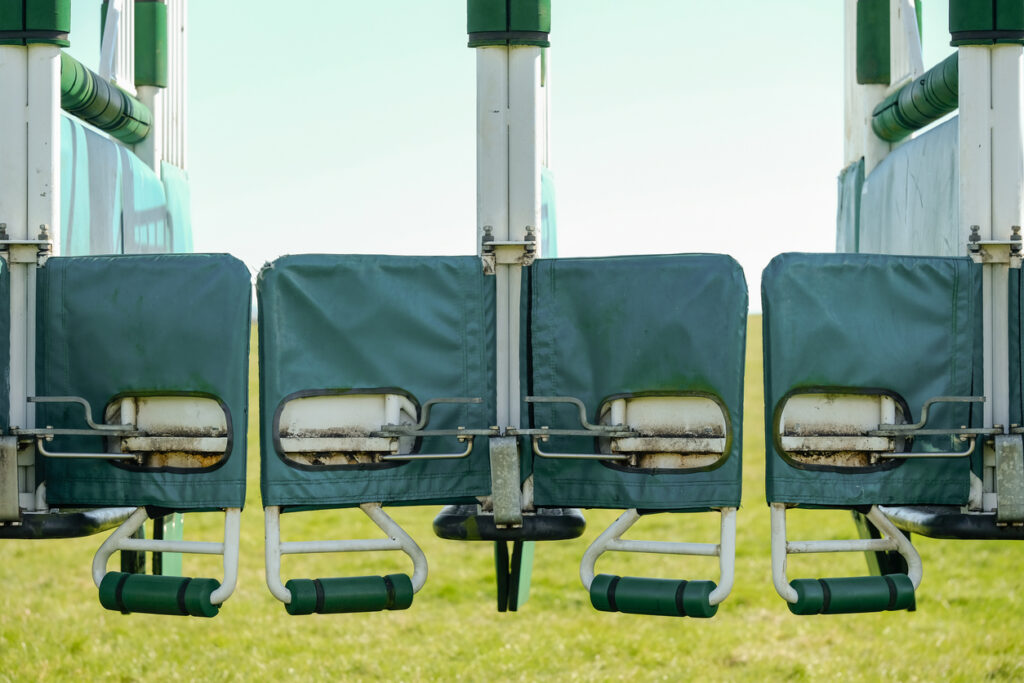
Cheltenham’s January Trials Day serves two functions simultaneously. It is a racecourse fixture in its own right, with valuable conditions races that carry genuine prize money. But for trainers, jockeys, and analysts, it functions primarily as an intelligence-gathering exercise for the Festival six weeks later. The ground at Prestbury Park on Trials Day is not necessarily the ground that will obtain in March, but the drainage patterns, the cambers, and the differential between the cross-country circuit and the chase course are fixed features that carry across every run of the season.
The Cheltenham Surface: Permanent Characteristics
Cheltenham’s chase course runs over ground that is fundamentally different from the hurdles track. The chase course climbs from the start, stiffens in the back straight, and presents the notorious combination fence at the top of the hill before horses descend into the home straight. The camber through the back section pushes horses toward the outside rail in wet conditions, a bias that can be exploited by jockeys who know to drift wide on the approach to the downhill fence and reclaim the inside as the track falls toward the home turn.
The hurdles track is flatter through the back but carries the same uphill finish, the last 225 yards into the stand rising by approximately 30 feet. In soft or heavy conditions, horses that have been ridden conservatively through the back section still have energy reserves when they reach the rise. Those that have been pushed to maintain position in the back straight frequently weaken before the line.
The January 2026 Data Points
Cheltenham raced on New Year’s Day 2026 on ground described as Soft, Heavy in places. The feature race, the Relkeel Hurdle, was won by Kabral Du Mathan, trained by Dan Skelton and ridden by Harry Skelton, who “doesn’t race like a three miler” according to his trainer’s own pre-race caution. But the horse adapted, and the Skelton assessment post-race confirmed the Cheltenham hill was not a problem for him on soft ground.
The Dorset View Novices’ Chase on the same card saw course winners performing to expectations, while horses drawn wide in the early stages of the back straight consumed significantly more energy than those who tracked the inside in the deteriorating going. This differential, already measurable at a Trials Day meeting, will be amplified if the Festival arrives on Heavy ground.
How February 2026 Ground Shapes March Probability
The winter of 2025-26 has been one of sustained rainfall across the South and West of England. The IHRB’s Fairyhouse ground log noted 41mm of rain falling in a single 24-hour period around 13 February 2026. Cheltenham, with its clay-loam base over impermeable bedrock, retains moisture aggressively once winter saturation is established. The drainage improvements carried out in recent years allow the course to shed surface water faster than it once did, but they cannot alter the subsoil moisture that accumulates from November onwards.
The probability range for the 2026 Cheltenham Festival, given the February conditions across the UK, sits realistically between Soft and Good to Soft. A prolonged dry period of 10 – 14 days without significant rainfall before the Festival opener on 10 March would be needed to reach Good to Firm in places, and current winter patterns make that scenario less likely than not.
Track Bias Forecast for Festival 2026
If ground remains soft: the chase course bias will favour horses that are ridden patiently through the back, with energy preserved for the climb. Front-runners tend to be caught on the run-in unless the pace has been conspicuously slow early. Harry Skelton’s hold-up style is well-aligned to this scenario.
If ground firms toward good: the hurdles track becomes faster-run through the back, suiting horses with natural toe. The camber bias toward the outside reduces on better ground. Front-runners can become harder to pass on the home straight when the going is quicker.
The consistent factor in both scenarios: the rise from the last 225 yards always favours horses with genuine resolution and a clean jump at the final obstacle. The Cheltenham hill does not lie.


