

Course Guide: Ascot, Royal Patronage, Global Prestige and Jump Racing Excellence
 |
|


Overview
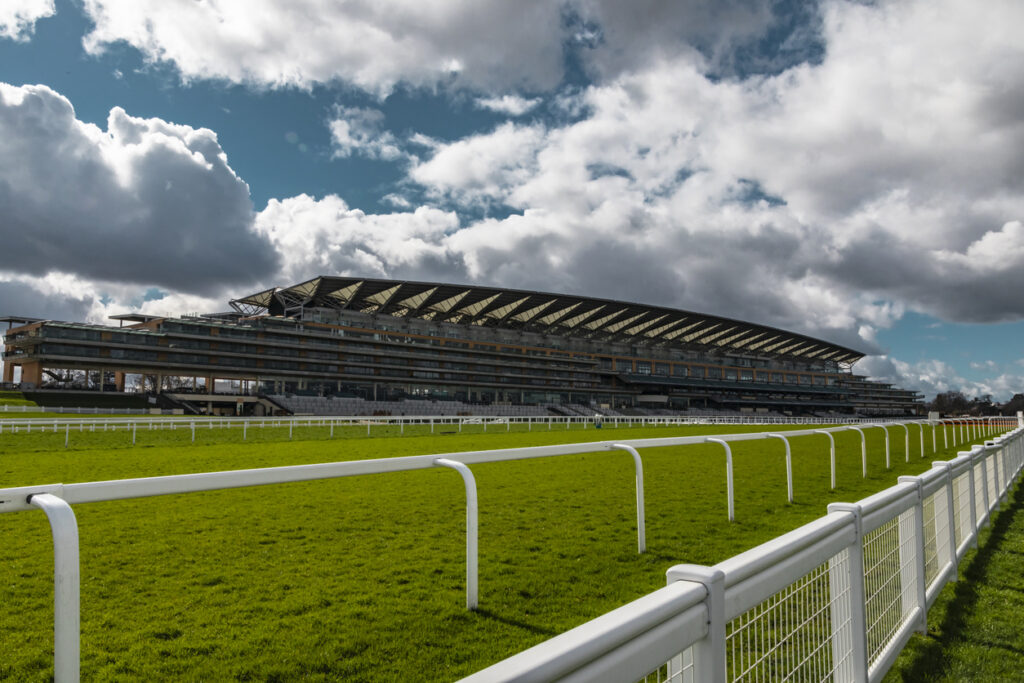
Ascot Racecourse in Berkshire represents the closest connection between the British Crown and thoroughbred racing that exists anywhere in the world. Founded by Queen Anne in 1711, the course has operated under royal patronage for over three centuries. Located 6 miles from Windsor Castle and 25 miles west of central London, Ascot combines proximity to the capital with a setting that has become synonymous with the highest traditions of British sporting and social life.
The course operates as a dual-season venue: a world-class flat track hosting Royal Ascot in June and the King George VI and Queen Elizabeth Stakes in late July, and a respected National Hunt venue staging elite jump racing from November through February. The combination of these two distinct programmes makes Ascot one of the most versatile and prestigious venues in world racing.
The Course
Ascot is a right-handed, galloping oval of approximately 1 mile 6 furlongs with a run-in of 2 furlongs from the final bend. The track is relatively flat by the standards of jumping venues, far gentler than Cheltenham or Aintree, which produces a profile that favours horses with sustained speed rather than pure stamina. The straight mile, used for several major Royal Ascot sprints, is one of the fairest tests in British racing, with no significant undulations creating tactical advantages.
The course underwent a £200 million redevelopment completed in 2006 that created one of Europe’s finest racing facilities. The grandstand accommodates 26,000 spectators with 36 private boxes and multiple restaurants. The Parade Ring is visible from most public areas, allowing close inspection of horses before each race.
Royal Ascot
Royal Ascot in June is where Ascot’s global reputation truly resides. The five-day meeting features 36 races including eight Group 1 events. The Royal Procession, where members of the Royal Family arrive each day by horse-drawn carriage and parade in front of the grandstand before the racing starts, is a defining tradition that has continued unbroken since the course’s founding. Strict dress codes apply: morning dress with top hats for men in the Royal Enclosure, formal day dress with hats for women.
Key Group 1 races across the five days include:
– **King’s Stand Stakes** (5f, Tuesday, the meeting’s premier sprint
– **Queen Anne Stakes** (1m, Tuesday), the opening day’s miler
– **Prince of Wales’s Stakes** (1m 2f, Wednesday), the meeting’s star middle-distance race
– **Gold Cup** (2m 4f, Thursday/Ladies’ Day), the world’s premier staying flat race
– **Coronation Stakes** (1m, Thursday), for fillies and mares
– **Commonwealth Cup** (6f, Friday), for three-year-old sprinters
– **Diamond Jubilee Stakes** (6f, Friday), the finale sprint championship
– **St James’s Palace Stakes** (1m, Tuesday), for three-year-old milers
The 2026 Royal Ascot is scheduled for 16 – 20 June.
The King George VI and Queen Elizabeth Stakes
Run in late July over 1 mile, 3f, 211 yards, the King George VI and Queen Elizabeth Stakes is Ascot’s premier all-aged flat race and regularly attracts the season’s best middle-distance horses from across Europe and beyond. The race has a history dating back to 1951 and its roll of honour includes Ribot, Mill Reef, Brigadier Gerard, Shergar, Dancing Brave, Galileo, and Frankel. For trainers managing a middle-distance three-year-old after Epsom, the King George is the natural summer target.
National Hunt Racing at Ascot
While Ascot’s global reputation rests on its flat racing, its National Hunt programme between November and February is of genuine quality. The Betfair Ascot Chase in February is a Grade 1 steeplechase and a significant trial for the Cheltenham Gold Cup. The Clarence House Chase (Grade 1) is a key two-mile chase at the meeting’s higher end.
Jonbon, trained by Nicky Henderson, won the 2026 Ascot Chase on 14 February, a race that demonstrated the quality Ascot attracts even outside Royal Ascot week, drawing a field including some of Britain’s elite chasers.
Ground conditions at Ascot jump meetings tend to ride faster than Cheltenham or Aintree due to superior drainage and the sandier subsoil. Good to Soft recorded at Ascot in February typically equates to a faster racing surface than the same description at most other National Hunt venues.
Accessibility
Ascot is 35 minutes by direct train from London Waterloo (South Western Railway). The station is a five-minute walk from the racecourse entrance. By road, Ascot is accessible from the M3 (Junction 3) or M4 (Junction 6), with parking at the course. During Royal Ascot, traffic management across the area is significant so rail travel is strongly recommended.


