

Desert Orchid: The Grey Who Won Hearts and the 1989 Gold Cup
 |
|


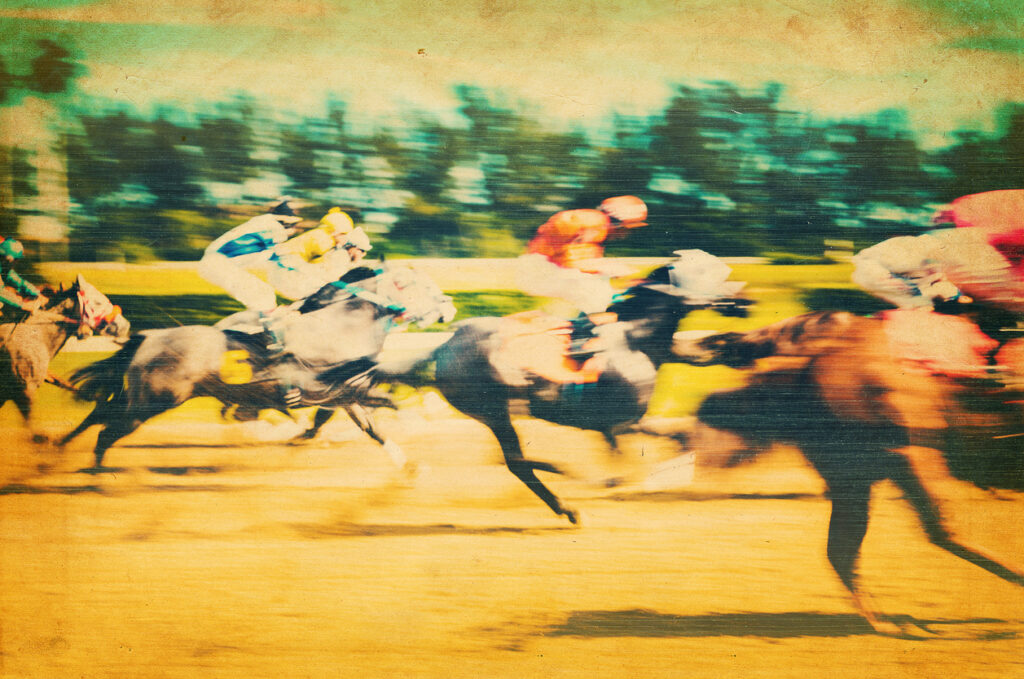
Desert Orchid, “Dessie” to the millions who loved him, was the grey gelding who became British racing’s most popular horse of the 1980s. His 1989 Cheltenham Gold Cup victory in testing conditions he supposedly could not handle remains one of the race’s most celebrated wins. But Desert Orchid’s significance extends far beyond a single race. He made jump racing accessible to a mass audience and demonstrated that charisma and courage matter as much as statistical dominance.
The Distinctive Grey
Desert Orchid’s colour made him instantly recognisable. Grey horses are rare in jump racing, and Desert Orchid’s striking appearance, combined with his aggressive front-running style, made him a television natural. When he raced, casual viewers could follow the action simply by watching for the grey in front.
Trainer David Elsworth and regular jockey Simon Sherwood created a partnership that showcased Desert Orchid’s strengths. The horse loved right-handed tracks, preferred good ground, and ran best when allowed to dominate from the front. The 1989 Gold Cup violated every one of those preferences and he won anyway.
The 1989 Gold Cup
Cheltenham is left-handed. The going was soft. Desert Orchid was giving weight to younger, fresher opponents. The betting public made him favourite anyway, because they believed in him, and Desert Orchid delivered.
Simon Sherwood rode a masterclass, keeping Desert Orchid in touch early, letting him find his rhythm on the second circuit, and producing him with a sustained challenge from the home turn. The grey rallied with tremendous courage to overhaul Yahoo in the final strides, winning by 1? lengths. The reception he received remains one of Cheltenham’s most emotional moments.
The King George VI Chase Record
Desert Orchid won the King George VI Chase at Kempton four times (1986, 1988, 1989, 1990), making him the most successful horse in the race’s history. The King George, run on Boxing Day over three miles on Kempton’s right-handed, galloping track, suited him perfectly. His dominance of the race cemented his status as the era’s premier two-and-a-half-mile chaser.
The Public Connection
What made Desert Orchid special was not simply his ability but the connection he forged with the British public. He raced during the era when racing was still a mainstream television sport in the UK, and his front-running style made him compulsively watchable. When he won, the celebrations were joyous. When he lost, the disappointment was genuine and widespread.
He retired in 1991 with 34 wins from 70 starts, a solid but not extraordinary record. But those numbers miss the point. Desert Orchid was about the experience of watching him race, the anticipation before his races, and the shared national emotion when he won or lost.
The Legacy
Desert Orchid lived to age 27, spending his retirement at Newmarket. When he died in 1999, the tributes reflected the genuine affection in which he was held. A bronze statue stands at Kempton. His name appears on races, breeding programmes, and racing memorabilia. But his real legacy is intangible: he made jump racing popular in a way that statistics and records cannot.
Modern grey chasers, One Man, Neptune Collonges, Coneygree, are inevitably compared to Desert Orchid. The comparison is unavoidable; however, none have matched his combination of ability, charisma, and public appeal. Desert Orchid was not the greatest steeplechaser who ever lived. But he was the most loved. That matters.


