

Going Sticks and Penetrometers: The Science of Measuring What Horses Feel
 |
|


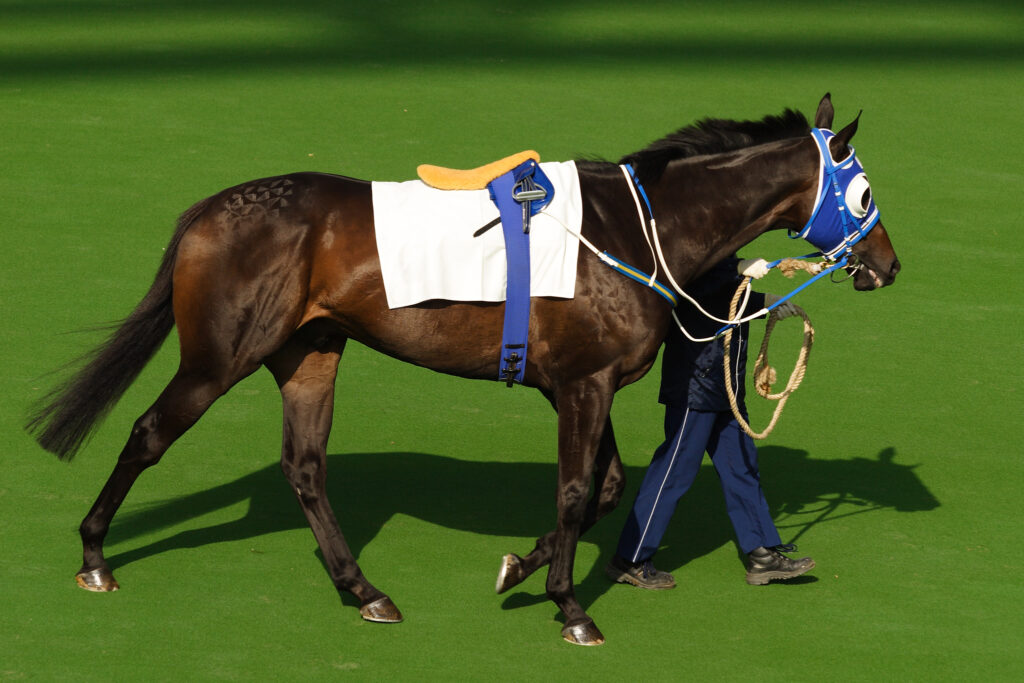
For most of racing history, going descriptions were subjective assessments made by clerks of the course walking the track and judging firmness by feel. The introduction of the TurfTrax GoingStick in the early 2000s attempted to replace human judgment with objective measurement. The device transformed going reports from opinion to data, and immediately generated controversy about whether mechanical measurement could capture what horses actually feel when racing.
How the GoingStick Works
The TurfTrax GoingStick is a penetrometer, a device that measures ground resistance by driving a probe into the turf and recording the force required. The device is pushed vertically into the ground to a standardised depth, and sensors measure the resistance encountered. The reading is recorded on a 0-14 scale, where lower numbers indicate firmer ground.
Clerks of the course take multiple readings across different parts of the track, typically 30-50 readings per assessment, and calculate an average. The British Horseracing Authority establishes ranges that correspond to official going descriptions: Firm (1.0-4.5), Good to Firm (4.6-6.5), Good (6.6-8.5), Good to Soft (8.6-10.5), Soft (10.6-12.0), and Heavy (12.1+).
The system provides consistency: two different clerks using the device at the same venue should produce similar readings, whereas two clerks using subjective assessment might disagree significantly.
The Controversies
The GoingStick’s introduction was immediately controversial. Trainers and jockeys argued that the device measured surface penetration but not subsoil moisture, drainage characteristics, or the “give” in the ground that horses actually experience when galloping. A track can record a “Good” reading on the GoingStick but ride softer or firmer than that description suggests.
Critics also pointed to variation across the track. Haydock’s back straight, exposed and slow-draining, might record significantly different readings than the home straight’s better-protected section, yet both are part of the same track and covered by a single official going description. The GoingStick readings reveal this variation but cannot resolve how to communicate it to punters and horsemen making race-day decisions.
The Clerk of the Course Discretion
The BHA’s guidelines allow clerks of the course to override GoingStick readings if they believe the device does not accurately reflect riding conditions. This discretion preserves human judgment while incorporating mechanical data, but it also reintroduces the subjectivity the device was meant to eliminate.
In practice, experienced clerks use the GoingStick as one input among several: visual inspection, weather forecasts, recent rain totals, track walkover assessments, and feedback from riders schooling horses that morning all contribute to the final going description. The GoingStick provides objectivity, but it does not provide certainty.
International Variations
Different racing jurisdictions use different measurement systems. French racing employs a penetrometer but with different calibration standards. Irish racing uses TurfTrax GoingSticks calibrated to slightly different ranges than British ones. American racing largely relies on subjective assessment without standardised mechanical measurement.
This creates challenges for international form comparison: a “Good” in France may not equal “Good” in Britain, and neither may equal “Fast” in the United States. The GoingStick has improved consistency within British racing but cannot resolve these international inconsistencies.
The Future
Next-generation going measurement will likely incorporate multiple sensors: surface penetration, subsurface moisture, compaction resistance, and perhaps even vibration analysis to assess how the ground responds to impact. Integration with horse-mounted sensors could eventually allow going to be measured by how the ground actually affects horses during races, rather than by mechanical proxies.
But the fundamental challenge remains as ground conditions are variable, complex, and experienced differently by different horses. The GoingStick improved going assessment by making it more objective. It did not, and cannot, make it perfectly predictive.


