

Legends & History: Arkle, The Greatest Steeplechaser That Ever Lived
 |
|


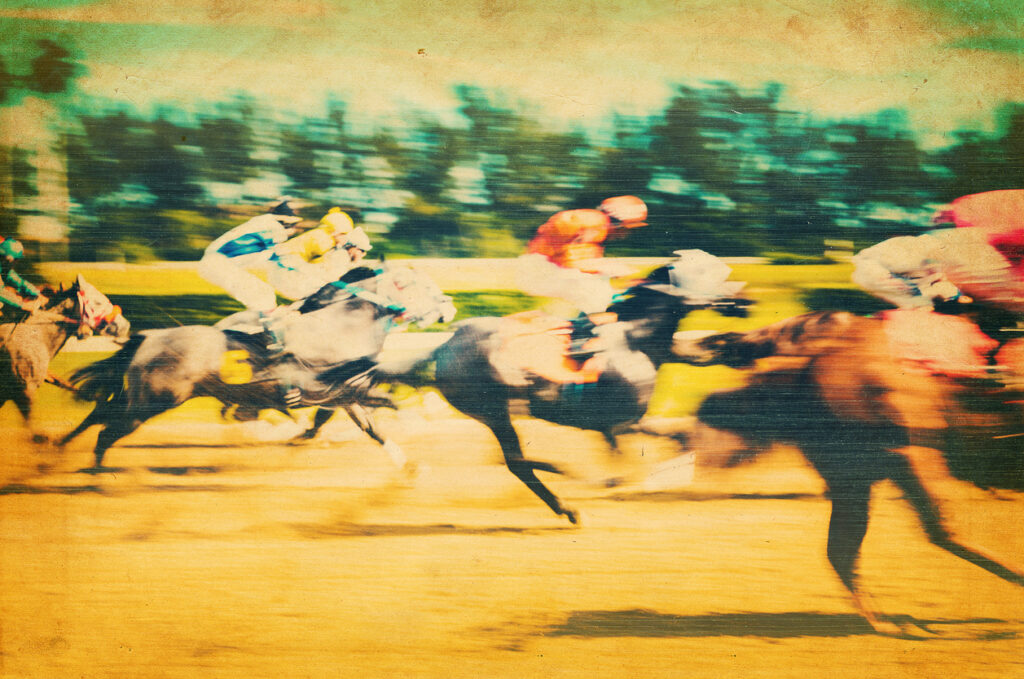
When the Irish handicapper created a separate weight scale during the 1964 – 66 racing seasons, one column for Arkle, another for “all other horses”, it was an acknowledgement that the sport had encountered a phenomenon it had no framework to accommodate. Arkle did not merely win races. He made the handicapper’s job redundant, forced the best horses in Britain and Ireland to race for second place, and became the first equine athlete in the history of jump racing to transcend the sport itself.
Origins
Arkle was foaled at Ballymacoll Stud in County Meath on 19 April 1957. His pedigree was undistinguished in the manner that defines many great jump horses: his sire Archive had never won a race and stood at a modest 48 guineas. His dam, Bright Cherry, had won seven races over jumps for Tom Dreaper’s yard. The combination produced an ungainly bay gelding who was sold at Goff’s Bloodstock Sales in August 1960 for 1,150 guineas to Anne Grosvenor, Duchess of Westminster, on the advice of Dreaper, who trained for her.
The Duchess named her new horse after the mountain Arkle in Sutherland, Scotland, which she could see from her estate. Arkle’s racing name would become one of the most recognisable in the history of sport.
The Early Career
Arkle’s first racecourse appearance, at Mullingar in December 1961, produced a third-place finish in a bumper. His first win over hurdles came in January 1962 at Navan, when stable jockey Pat Taaffe had chosen to ride the favourite and young lad Liam McLoughlin took the mount on Arkle, who won by one and a half lengths. Taaffe’s opinion changed quickly. The two would become inseparable partners.
Over the 1962 – 63 and 1963 – 64 seasons, Arkle developed at a pace that left observers accelerating their assessments. He won hurdle races, moved to fences, and also won those. But the defining test was coming: a meeting with Mill House, the reigning Cheltenham Gold Cup champion, considered by many in Britain to be the best steeplechaser they had seen.
The Gold Cup Trilogy
**1964:** Mill House had won the 1963 Gold Cup as a six-year-old and was considered the clear favourite for the 1964 renewal. British racing circles expected him to establish himself as the new colossus of jump racing. Instead, Arkle made the journey from County Meath and won by five lengths. It was the last time Arkle started at anything other than prohibitive odds.
**1965:** Mill House ran again. Arkle won by twenty lengths.
**1966:** Three consecutive Gold Cups, a feat last achieved by Golden Miller in the 1930s. Arkle won by thirty lengths. The race had three runners; the other two were racing for place money.
His three Gold Cup wins were run at level weights, in those years the Gold Cup was not a handicap, but the real measure of Arkle’s quality came in the handicaps. He carried 12st 7lb in the 1964 Hennessy Gold Cup and broke the course record by more than four seconds. The handicapper’s separate scale was not hyperbole; it was the only mathematically honest response to a horse whose ability existed outside the normal range.
In four seasons from 1962 – 63, Arkle won 24 times from 26 starts. He won the King George VI Chase, the Irish Grand National, the Hennessy Gold Cup twice, the Gallaher Gold Cup twice, and dozens of smaller races. Jockey Pat Taaffe rarely needed to move on him in Gold Cup races; his natural galloping and jumping power was sufficient.
The Nation’s Horse
Arkle’s fame extended far beyond racing circles. He received fan mail from across Britain and Ireland, letters addressed simply to “Arkle, Ireland” that unfailingly reached Tom Dreaper’s yard at Greenogue, Kilsallaghan, because every postal worker in the country knew who and where he was. He appeared at the Horse of the Year Show and was given his own dedicated section in the national newspapers. Ireland in the 1960s had few sporting heroes of his magnitude; he filled a space in the national consciousness that no horse before or since has quite replicated.
Henrietta Knight, trainer of Best Mate (the last horse to win three consecutive Gold Cups, in 2002 – 04), reflected on the comparison often invited between the two: “I have to say that Arkle was superior. They were different horses running in different eras, but Arkle is the best horse I have seen by a long way. You never know what life brings, but I don’t expect to see one like him again.”
The Injury and Legacy
A fractured pedal bone sustained at Kempton Park in December 1966, when carrying 12st 7lb in the King George VI Chase, ended Arkle’s racing career. He was 9 years old and had 35 career starts (27 wins, 2 seconds, 5 thirds). He spent his retirement at Brassknocker House, the Duchess of Westminster’s home, where he lived until 31 May 1970, when he was euthanised due to chronic arthritis.
His Timeform rating of 212 remains the highest ever awarded to a steeplechaser. Statues of him stand at Cheltenham Racecourse (unveiled 1972) and in Ashbourne, County Meath, near Dreaper’s former yard. Two major Grade 1 races are named in his honour: the Arkle Challenge Trophy at Cheltenham and the Arkle Novice Chase at Leopardstown. He was inducted into the British Steeplechasing Hall of Fame in 1994. In 2004, he narrowly beat Desert Orchid in a Racing Post poll to be named the all-time favourite British or Irish racehorse.
The 2026 Cheltenham Gold Cup winner Gaelic Warrior became only the second Arkle winner to go on to win the Gold Cup, the first being Alverton in 1979. In every description of the comparison, Arkle’s record provides the benchmark. His fame, more than sixty years after his peak, remains undiminished. He was, and remains, the standard against which every jumps horse is measured.


