

Rachael Blackmore: The Jockey Who Rewrote What Was Possible
 |
|


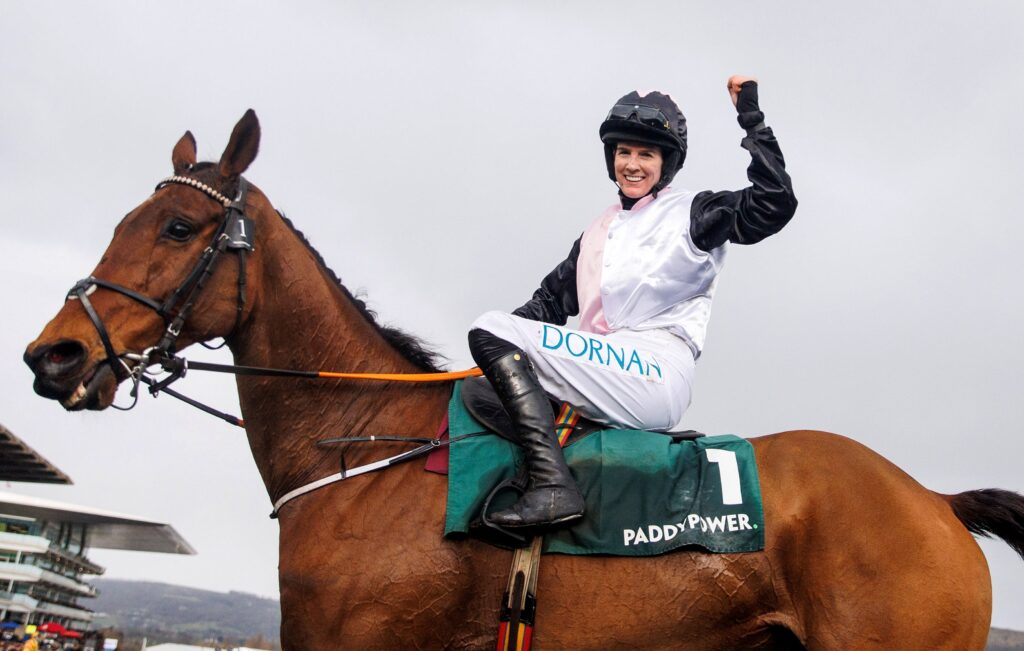
When Rachael Blackmore steered A Plus Tard to victory in the 2022 Cheltenham Gold Cup, she became the first female jockey to win jump racing’s most prestigious championship. But that single achievement, historic as it was, represents only one chapter in a career that has systematically dismantled assumptions about what women could accomplish in National Hunt racing.
The Cheltenham Breakthrough
The 2021 Cheltenham Festival provided the clearest evidence that Blackmore was not simply a talented female rider breaking through glass ceilings, she was one of the elite riders in the sport, full stop. She won six races across the four-day meeting, including the Champion Hurdle on Honeysuckle, becoming the first woman to be the Festival’s leading jockey. The performance wasn’t a fluke; it was a demonstration of sustained excellence across different horses, different race types, and different tactical scenarios.
Honeysuckle herself became a symbol of Blackmore’s consistency. The mare won 16 consecutive races including the 2021 and 2022 Champion Hurdles, with Blackmore aboard for each one. That partnership, rider and horse in complete synchrony, produced a win record that would have been exceptional for any jockey, male or female.
The Grand National
In 2021, Blackmore became the first female jockey to win the Grand National, partnering Minella Times to victory at Aintree. The win carried significance beyond gender: it demonstrated that she could manage the unique tactical demands of the National’s 4-mile marathon over 30 fences, maintaining composure in the chaos that the race uniquely creates.
The post-race interview captured something important about Blackmore’s approach. She did not dwell on the historic nature of the achievement or frame it primarily in gender terms. She talked about the horse, the race, and the performance, because that is what elite athletes do.
The Gold Cup
The 2022 Gold Cup victory on A Plus Tard completed Blackmore’s collection of the sport’s major trophies. She had already ridden the horse to second place in 2021, and the 2022 win by four and a half lengths was emphatic. It was also strategic: Blackmore judged the pace conservatively, kept A Plus Tard in touch through the early stages, and produced him with a perfectly timed challenge from the final fence.
Willie Mullins, her boss and the most successful trainer in Cheltenham Festival history, noted after the race that Blackmore had done exactly what he’d asked, which sounds routine until you realise that “what he’d asked” was to win the Gold Cup in a field containing previous champions and future stars.
What Changed
Blackmore’s sustained success forced racing’s establishment to confront a reality it had long avoided: that the physical demands of jump racing were not a barrier that excluded women from elite-level competition. Caroline Beasley won at the 1983 Cheltenham Festival; Gee Armytage won the Kim Muir in 1987. But those were isolated achievements, treated as exceptions proving a rule about male dominance.
Blackmore’s record is not an exception. It is the evidence of systematic excellence. She is not “a great female jockey”, she is one of the great jockeys of her generation, regardless of gender. That distinction matters, because it removes the qualifier that subtly diminishes achievement.
The barriers Blackmore broke were not made of rules or regulations. They were made of assumptions, culture, and the quiet exclusions that operate without being stated aloud. By winning at the highest level repeatedly and emphatically, she rendered those assumptions obsolete.
That is what makes her story significant. Not the firsts, though they matter. But the fact that after Blackmore, the question shifted from “can a woman win the Gold Cup?” to “who’s going to win the Gold Cup?”, and Blackmore being among the candidates considered without caveat or surprise.


