

Sustainability: Counting the Hoofprint, What Is Horse Racing’s Carbon Footprint?
 |
|


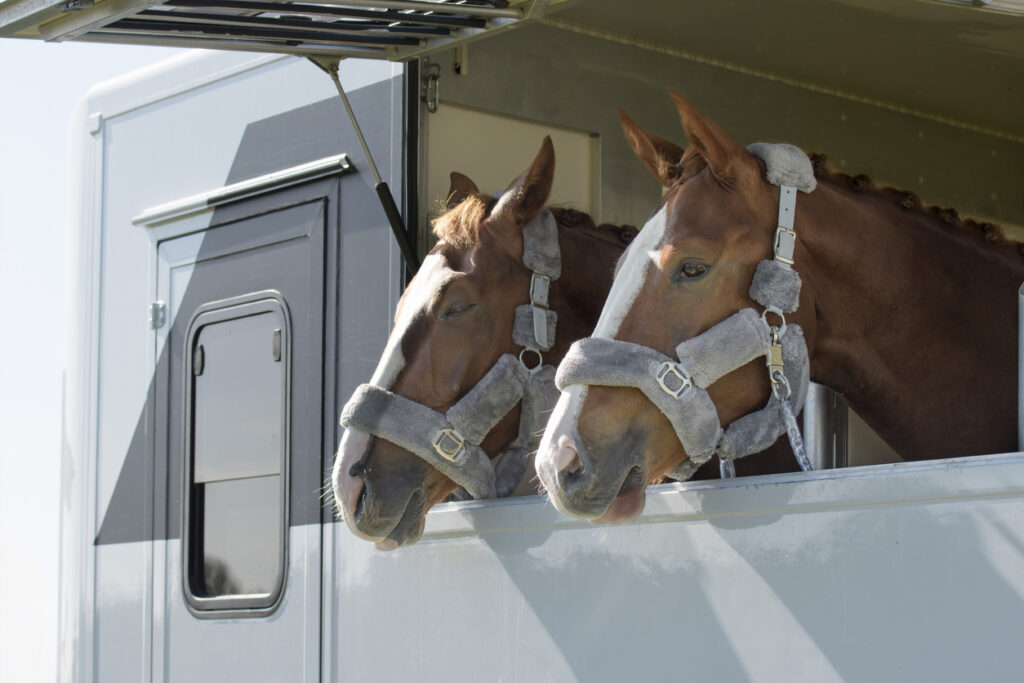
Understanding the environmental impact of horse racing requires looking beyond the obvious, the lorries on the motorway, the planes carrying international horses, to the full lifecycle of a thoroughbred athlete and the operational systems that support it. Research published in 2024 and 2025 has begun to apply rigorous methodology to this question, producing the first credible estimates of the sport horse’s carbon footprint and the relative contributions of different emission sources.
The Academic Framework
Research presented at the 19th International Society for Equitation Science Conference in 2024 by Iris Huisman from Wageningen University, commissioned by the European Equestrian Federation, applied Life Cycle Assessment (LCA) methodology to sport horses. LCA measures the total carbon footprint of a product or activity across its entire lifecycle, from raw material extraction to end-of-life disposal and has previously been applied extensively to food production and manufacturing but rarely to sport.
The Hoofprint Model developed for this research considered sport horses across three lifecycle phases: reproduction (mares, stallions and foals), raising young horses, and active competition horses. Transport to competitions was included. The results were expressed in carbon dioxide equivalents (CO2-eq), combining the three principal greenhouse gases in equine operations:
Carbon dioxide (CO2): From fossil fuel combustion in transport and operations, and from deforestation for feed crop production.
Methane (CH4): Produced during hindgut fermentation in horses (their digestive process) and from manure storage. Methane’s global warming potential (GWP) is approximately 34 times that of CO2 over a 100-year period.
Nitrous oxide (N2O): Released from fertilisation of feed crops and from manure management. N2O has a GWP of approximately 298 times that of CO2.
The study found significant differences between the carbon footprints of different disciplines, with the major determinant being transport: “A major part of the carbon footprint of a sport horse is determined by transport.” Jumping horses, which travel to many more competitions and often further distances than dressage horses, had substantially higher carbon footprints in the study.
A visualisation that illustrates the scale: the conference’s own presenter estimated her return flight to New Zealand to present the research produced approximately 3,500 kg of CO2 equivalent, comparable to producing 13,000 glasses of milk. A dressage horse’s annual carbon footprint was equivalent to approximately 23,177 glasses of milk. A jumping horse with high competition mileage: approximately 205,365 glasses of milk.
These figures apply to equestrian sport rather than racing specifically, and the methodology would produce different results when applied to British thoroughbred racing’s operational model. But they establish the framework: transport is the dominant driver, and the methane and nitrous oxide from horses and their manure contribute significantly to the total.
What British Racing Produces
The BHA’s Racing Resilient strategy acknowledged that establishing a credible carbon baseline is a first-order task for British racing, meaning an authoritative, audited figure for the industry’s total annual emissions does not yet exist. What can be estimated from the available data:
Horse transport: Approximately 9,000 racehorses are in training in Britain at any given point. Each is transported to racecourses regularly, typically in large horseboxes carrying multiple horses. A racecourse may attract 100 – 200 horses for a major meeting. The cumulative horse-miles across 1,500 annual British race fixtures represent a substantial diesel fuel consumption. International transport, airfreight for horses travelling to Dubai, Hong Kong, France and other overseas targets, is significantly more carbon-intensive per horse-mile.
Human transport: Ruth Dancer’s estimate of 40,000 miles per jockey per year, if accurate across approximately 400 licensed jockeys, represents a significant contribution. Owners, trainers and racing staff similarly travel extensively for their sport. Spectators, particularly those attending the Cheltenham Festival from across Britain and Ireland, represent a further major transport emission source.
Racecourse operations: Lighting, heating, catering, machinery (groundskeeping, irrigation pumps, course maintenance equipment) and events infrastructure consume energy at all fixtures and throughout the maintenance season. Major racecourses that host public events throughout the year have significant annual energy budgets.
Manure and feed: Each horse produces approximately 50 pounds of manure per day, amounting to roughly 8 tonnes per year. Multiplied across a racing industry with tens of thousands of horses in various stages of training and breeding, the waste management challenge, and the associated methane and nitrous oxide emissions, is substantial.
What Reduction Looks Like
Based on the available evidence, the most impactful areas for carbon reduction in British racing are:
Transport electrification: The replacement of diesel horseboxes with electric or hybrid equivalents would substantially reduce the per-journey emissions of horse transport. Commercial electric horsebox models capable of carrying multiple horses are at an early stage of development, but the technology pipeline suggests this is a medium-term rather than long-term prospect.
Renewable energy at racecourses: Solar panels on grandstand roofs and stable roofs, ground-mounted solar on low-use land areas, and wind turbines where planning permits can significantly reduce the carbon intensity of racecourse operations. Paris Longchamp Racecourse has been cited as a leader in this area, generating a portion of its energy requirements from on-site solar. The BHA’s Racing Resilient strategy identifies this as a priority, with some UK courses already taking early steps.
Manure management: Converting horse waste from a disposal problem to a resource through composting and anaerobic digestion reduces both landfill use and methane emissions from manure storage. Some yards have already developed commercial relationships with horticultural operations that can use composted horse manure as a soil amendment.
Land carbon sequestration: Chalk downland and grassland, of which racing holds substantial acreage, can be managed to sequester carbon in soil organic matter. Reducing chemical fertiliser inputs (which produce N2O), increasing grassland diversity and managing grazing intensity to improve soil health are all proven approaches.


