

Weather & Going Watch: Grand National Trial Ground, How Haydock’s February Surface Shaped the Winner
 |
|


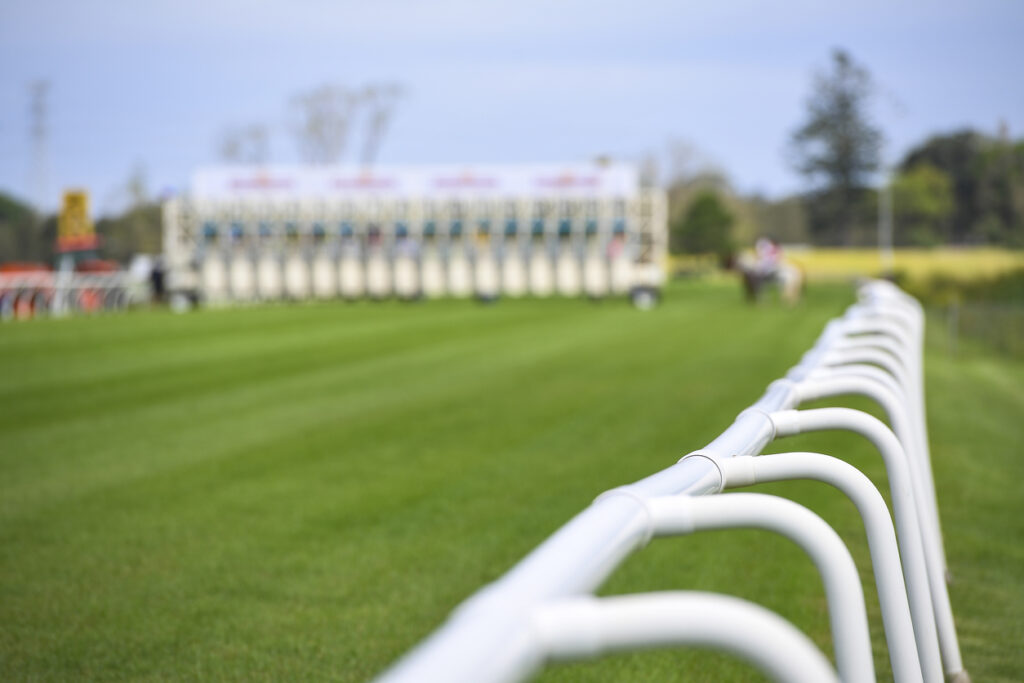
The William Hill Half A Mill Grand National Trial Handicap Chase at Haydock on 14 February 2026 was run on ground officially described as Soft (Heavy in places), downgraded from the initial Soft Heavy in places following three morning inspections and an overnight temperature that dropped to -2.8C. The going was the story of the race. Grand Geste won not simply because he was the best horse on the day, but because his connections had built a preparation plan around the kind of ground that typically obtains at Haydock in mid-February, and because his jockey, Danny McMenamin, understood how to use the track’s going asymmetry in his favour.
Three Inspections: The Overnight Frost Problem
The 14 February card at Haydock required three separate inspections before officials were satisfied the ground was safe for racing. The overnight low of -2.8C, well below what Haydock’s management would have been comfortable with, created concern about frost in the surface, particularly through the back straight which is exposed to prevailing south-westerly winds and sits in a slightly lower elevation than the home section of the track.
The three-inspection process, an early check, a second confirmation, and a final clearance, is standard practice for Haydock in this period of the year. Each check allows officials to assess whether overnight frost has penetrated below the surface and whether daytime temperatures have recovered sufficiently to give the ground adequate give. On 14 February, clearance was given, and the going was described as Soft (Heavy in places), a significant upgrade from the Soft Heavy in places reported by PG’s Tips the night before.
The Haydock Asymmetry
A critical feature of Haydock’s ground in soft conditions is the differentiation between the back straight and the home straight. The back section of the course is wider, more exposed, and sits on ground that holds moisture more readily. Horses racing down the back straight in soft going are working through the slowest part of the track. The home straight, by contrast, is better protected, drains more reliably, and rides a measurable degree better, sometimes described as “lovely” compared to the “dead” back section even on the same day.
The 22.27 seconds slow recorded in the Grand National Trial relative to standard time was driven largely by the energy cost of the back straight. McMenamin’s midfield position throughout the race put Grand Geste into the worst of the back-straight ground alongside, but not ahead of, the front-runners who were absorbing the heaviest energy drain. By the time the field turned for home, McMenamin had a horse with more in the tank than the pace-setters. The home straight’s better surface did the rest.
What This Means for Grand National Contenders
Trainer Joel Parkinson flagged Cheltenham’s Cross-Country course as a potential route for Grand Geste rather than Aintree, explicitly noting the horse “would need the soft ground there but the stiff track should suit him.” The going management at Haydock, three inspections, careful going description, conservative riding position, was not exceptional. It was what any well-managed jump race meeting in the English winter requires.
What the day demonstrated was that horses confirmed on Soft/Heavy going at Haydock over marathon distances carry genuine Cheltenham and Aintree credentials. The energy demands of 3 miles and 4? furlongs over Haydock’s testing ground are approximately equivalent to 4 miles at Aintree in better conditions. Grand Geste won it as a novice. That is a data point Parkinson and Smith will not forget.


